Strategy
Rummy strategy: probability, drop math and what skill actually moves
An honest strategy boundary statement. What a skilled player can shift across many hands, what stays variance on every deal, and the three decisions that move expected value most. The article is not a "winning formula", it is a way to think about decisions at the table.
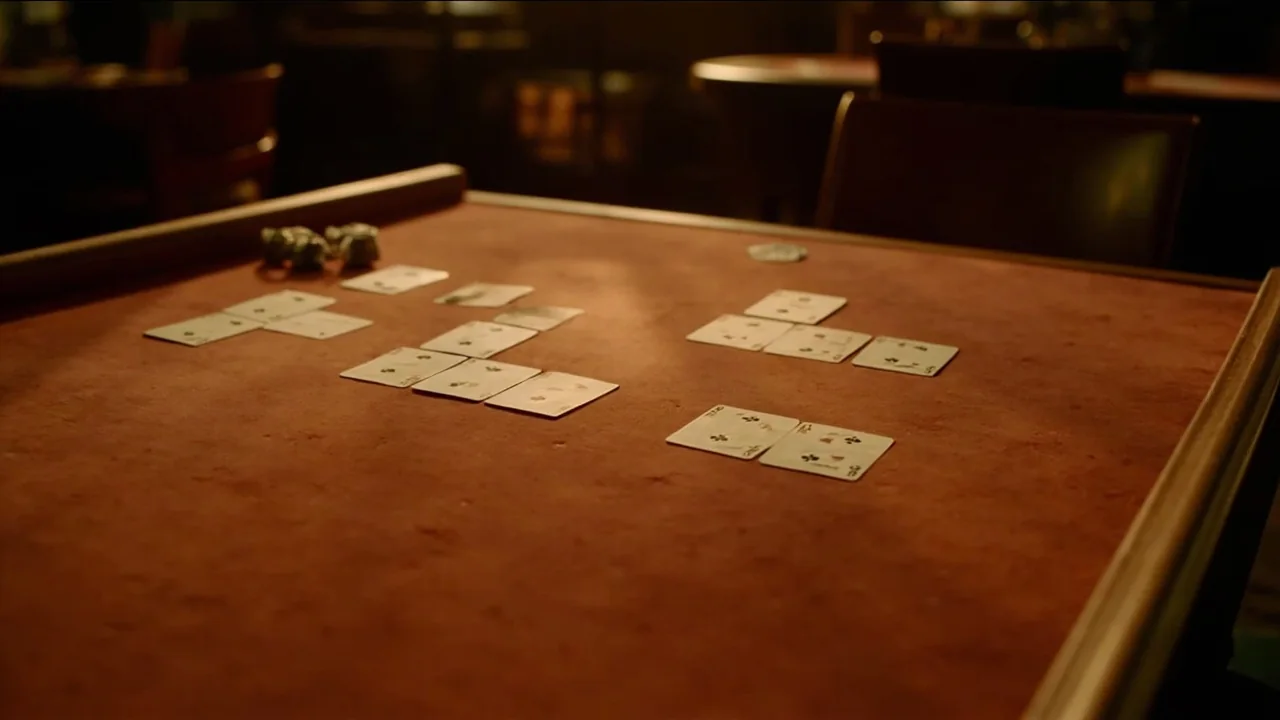
The honest version of rummy strategy is shorter than most strategy pages make it. Strategy changes the long-run cost of play, not the short-run luck of any single deal. The decisions that move expected value most are drop timing, pure-sequence completion discipline and discard reading. Everything else, counting cards across deals, betting progressions, "hot" lobbies, either does not work as advertised or moves the needle less than the drop decision does.
The strategy boundary, stated plainly
Skill in rummy has a ceiling. Once a player is reading discards well, locking pure sequences early, and choosing drops that match the table's per-point value, the room above gets narrow. Past that point, the dominant variables are session length, fatigue and tilt, not the next clever discard. Recognising the boundary is itself a useful skill.
Drop math, the highest-value decision
The drop is a single decision with three cost bands: drop at the first pick (roughly half the full-hand value), drop mid-hand (rising toward the full value), and continue (where the cost is the full-hand value if you do not declare). On most tables, the expected cost of a blind continuation is worse than the cost of an early drop when the opening hand offers no usable joker and no path to a pure sequence within two or three picks.
A worked example: a Points table with a per-point value of ₹1 and a maximum loss of 80 points. Drop at first pick costs ₹40. Continuing past the second pick with no pure-sequence progress risks the full ₹80 against an unknown hand shape. Drop is the cheaper option in expectation.
The same shape applies to Pool 201 but with ceiling pressure: late in the session, dropping near the ceiling can cost close to the full-hand value, so the early drop is the right call when the hand is not shaping up.
Pure-sequence completion discipline
Until a pure sequence is locked, every discard is a higher-variance bet. The reason is structural: a hand without a pure sequence cannot declare; any grouping built on jokers alone can be broken by one wrong card from the deck. Locking the pure sequence early converts the hand from a high-variance bet into a controllable mid-game problem.
The practical habit is to identify the longest run in the opening hand and protect it from discards that could break the suit availability. If the run is 5-6-7 of hearts, the heart suit is now a constrained resource, discarding hearts beyond the seven risks breaking the sequence.
Discard reading across formats
Discard reading is the most important skill in rummy once the rules are comfortable. The skill is not "counting cards" across deals, rummy has no memory across hands in Points and Deals formats, but noticing which cards an opponent is picking from the discard pile and which they are leaving.
If an opponent picks a 9♠ from the open pile, their hand probably has a sequence through that 9♠. If they leave a 9♠ on the open pile, their hand probably does not need that suit. The reading is local to the current hand, not cumulative across the session.
Pool 201 vs Points Rummy, the strategic delta
The drop decision changes shape between Pool 201 and Points Rummy. In Points, an early drop is cheap relative to a wrong declaration; in Pool 201, the early drop is cheap early in the session but rises toward the ceiling as the session progresses. The mid-game decision in Pool is therefore tighter than in Points, especially for players whose score is already above 80.
Players who do well in Pool 201 tend to play tighter in late session and looser in early session. Players who do well in Points tend to drop aggressively when the opening hand is unfavourable, regardless of session position.
Books, card counting, and what applies
"Card counting" in rummy means tracking which cards have been discarded in the current hand. There is no inter-hand memory in Points or Deals; in Pool, the same 13 cards are reshuffled at the start of every hand, so inter-hand memory does not apply there either. What does apply is reading the current hand's discard pile, which cards are picked, which are left, to make a local inference about an opponent's grouping.
Tilt and session length, the dominant variables
Practical experience on the felt suggests that session length is the single biggest variable a player can control. Decision quality drops sharply after ninety minutes of continuous play; the drop in quality is faster than most players notice. A two-hour session cap is a useful starting discipline.
Tilt is the second-largest variable. A player who has just taken a bad beat makes worse decisions on the next two or three hands than a player who has just won. The remedy is to drop early on the next two or three hands regardless of hand quality; the saved cost is usually larger than the saved time.
The strategy decision ledger
| # | Decision | When | Effect |
|---|---|---|---|
| 01 | Drop at first pick | No usable joker, no path to a pure sequence within two picks | Saves the cost of a likely wrong declaration |
| 02 | Lock the pure sequence first | Always, before any other grouping | Converts the hand from variance to mid-game control |
| 03 | Discard from a known suit | When a suit is exhausted in your hand | Prevents giving an opponent a free sequence card |
| 04 | Drop mid-hand | When pure sequence is still not forming by the second pick | Limits the cost of a doomed hand |
| 05 | Cap the session | After ninety minutes of continuous play | Decision quality drops sharply past this point |
| 06 | Drop the next two hands after a bad beat | When tilt is likely | Limits the cost of impaired decision quality |
What skill actually moves
Across many hands, three skills move expected value most: drop timing, pure-sequence completion discipline, and discard reading. Across a single hand, the dominant variable is the deck. Recognising which variable is in play at any given decision is itself a useful skill.
Probability, briefly
The probability of being dealt a usable opening hand depends on the deck and on the table size. At a six-player table, the chance of at least one usable joker in your opening 13 is around 60-65 percent. The chance of an immediate path to a pure sequence of three cards in the opening hand is roughly one in three. These are rough estimates; the precise number depends on the ruleset and the platform's deck.
A responsible-play reminder
The strategy above assumes the player has set a session cap and a stake cap before sitting down. If those limits have not been set, strategy cannot save the player from the table. Set the cap first; play second.
A two-week reading and play plan for the strategy boundary
The strategy boundary is best learned by play, not by reading. The reading is the map; the play is the territory. The two-week plan below is a way to turn the strategy guide into a habit.
Week one: rules and drop
Read the rules walkthrough on day one. Play two or three Points Rummy practice hands at the smallest per-point value on day two, focusing on the drop decision. Play two more practice hands on day three, focusing on the pure-sequence completion discipline. By the end of the week, the drop and the declaration are mechanical.
Week two: reading and ceiling
Read the strategy guide's decision ledger. Play two Pool 101 practice hands on day eight, focusing on ceiling pressure. Play two more on day nine, focusing on discard reading. By the end of the second week, the discard reading and the ceiling math are comfortable.
Beyond the second week, the strategy page is the reference. The point of the plan is to convert reading into play; once the habits are formed, the reading becomes a sanity check, not a tutor.
Responsible play resources : session length, deposit limit, self-exclusion.